> For the complete documentation index, see [llms.txt](https://mainstreet-finance.gitbook.io/mainstreet.finance/llms.txt). Markdown versions of documentation pages are available by appending `.md` to page URLs; this page is available as [Markdown](https://mainstreet-finance.gitbook.io/mainstreet.finance/msusd-and-strategy-vaults/strategy-vaults/msy-the-options-box-spread.md).
# msY - The Options Box Spread
### What is a Box Spread?
At its core, a box spread is a combination of options that creates a risk-free position mimicking a bond or loan. It’s built on put-call parity, a fundamental principle ensuring options prices align logically.
Here’s a simplified breakdown:
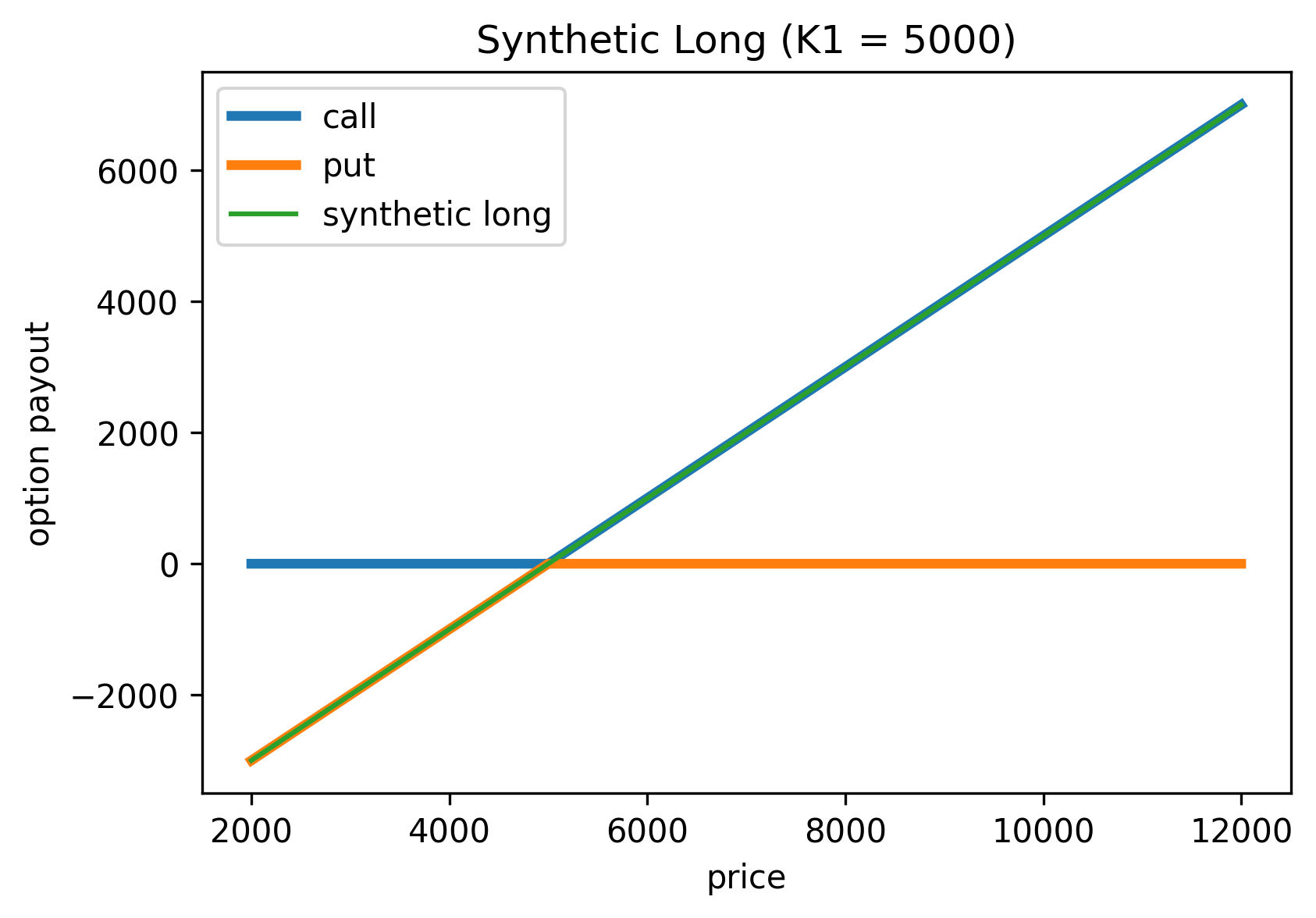
Synthetic Long: This involves buying a call option (right to buy an asset at strike price K1) and selling a put option (obligation to buy if exercised at K1), which is equivalent to being long the market.
\
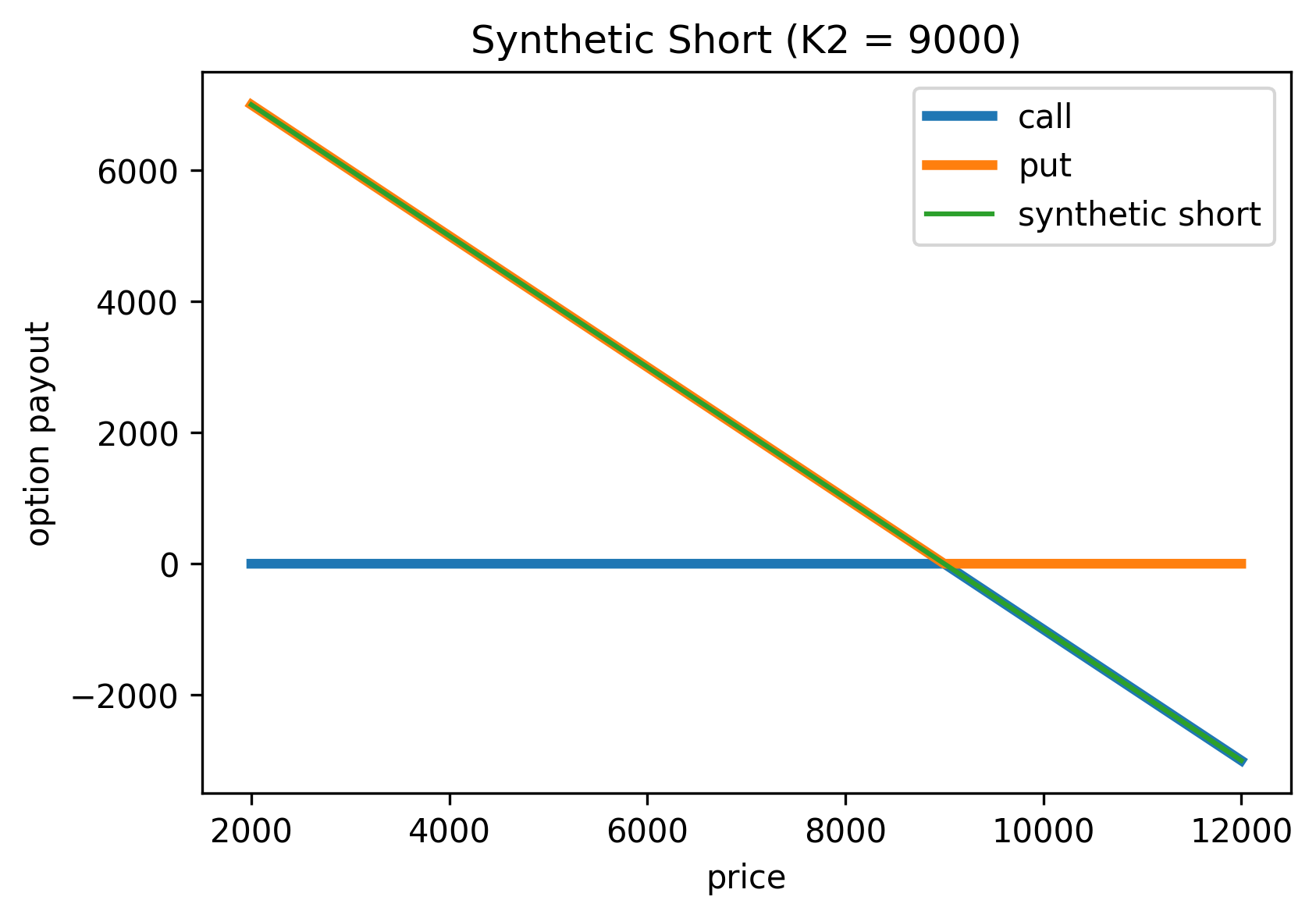
Synthetic Short: Conversely, buy a put at higher strike K2 and sell a call at K2, equivalent to being short the market.
\
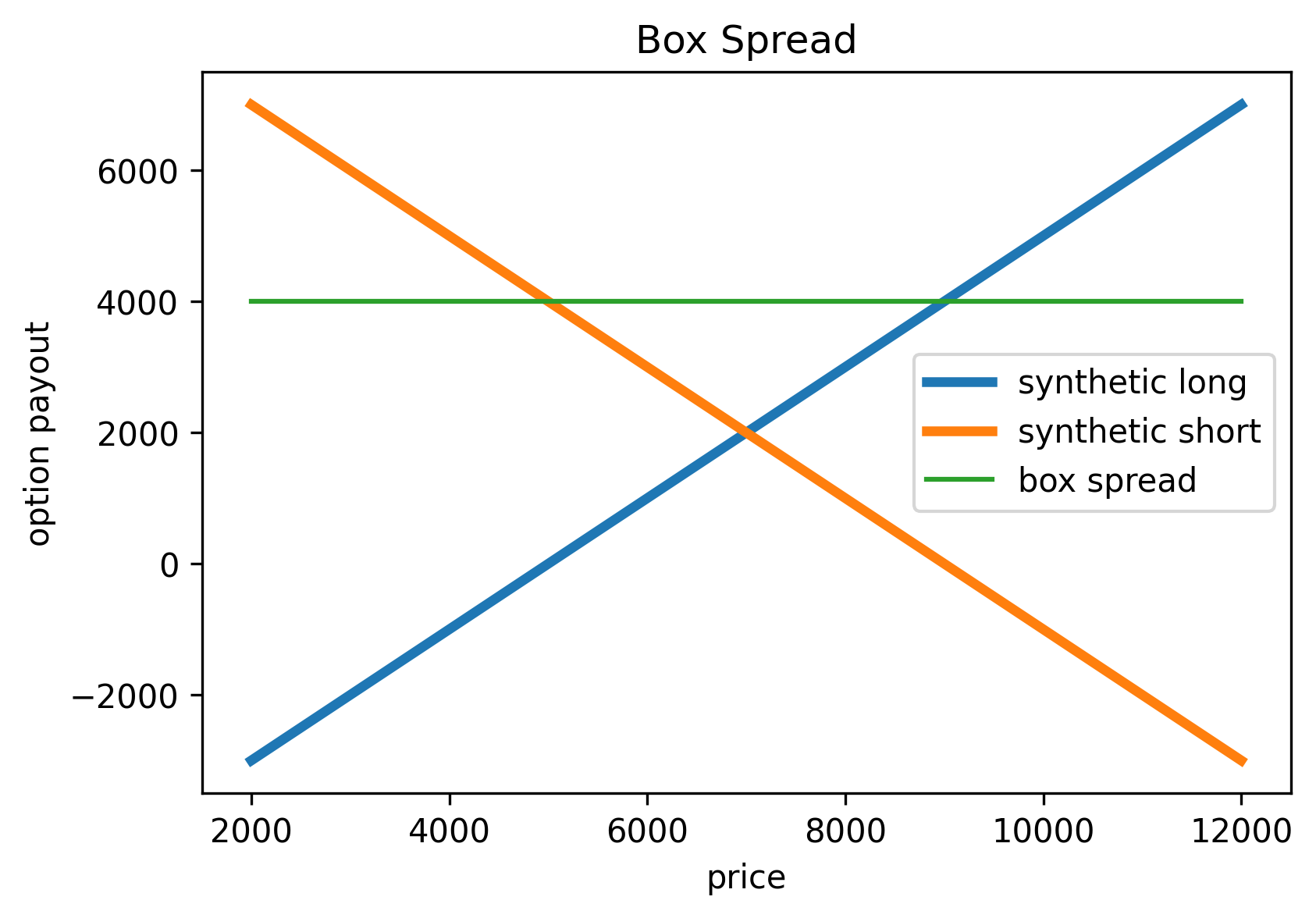
Full Box Spread (Synthetic Long + Synthetic Short): Combining these creates a position that’s long a synthetic bond, paying out the difference (K2 — K1) at expiration.
Think of it like owning a bond: You get a guaranteed payout at maturity. But unlike buying a bond outright, you don’t need to front the full notional amount — just maintain a margin balance (typically 5–10% of the notional). This margin efficiency allows for leverage, turning modest yields into compelling returns. For example, if the box implies a 5% annualized rate on a $1,000 notional, with 5x leverage, your effective yield on margin could approach 25%.
We execute these on Deribit using European-style options (exercisable only at expiration), ensuring predictability and minimizing path dependency.
### Rates Analysis: Consistent Box Yields
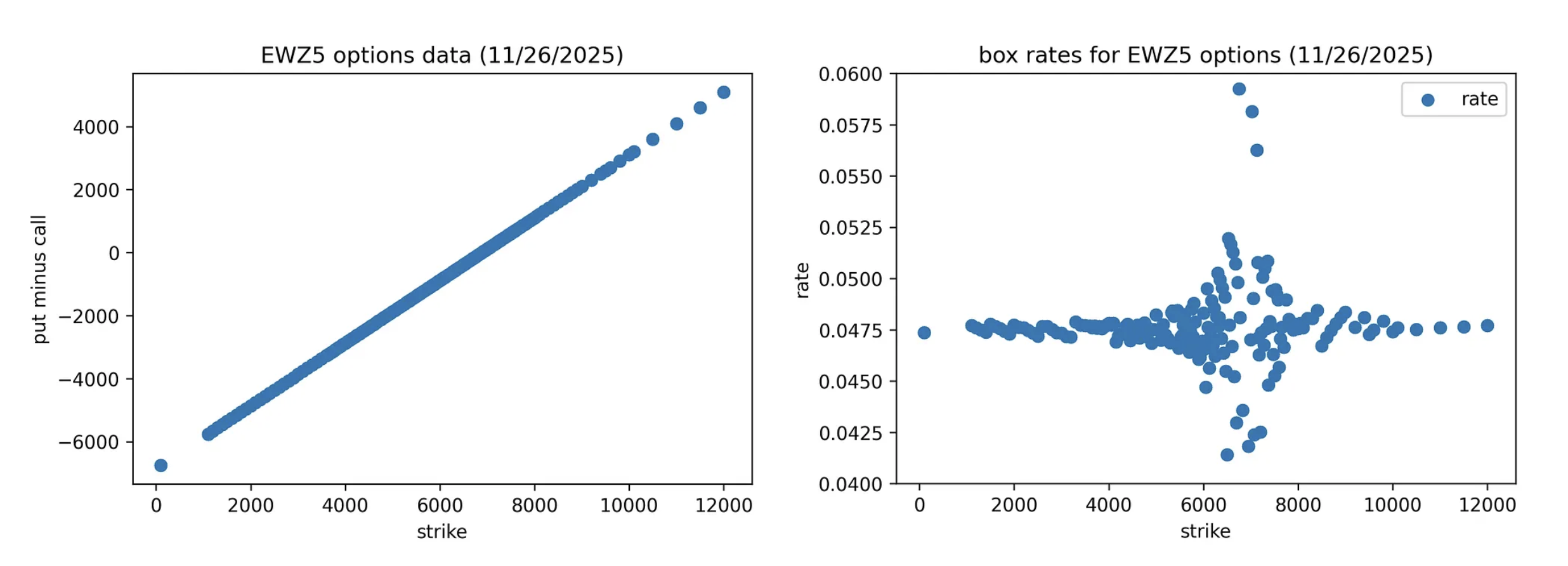
Since boxes require two strikes, it is reasonable to ask which strikes are optimal. In practice, this doesn’t seem to matter much. Rates are very consistent and even more stable further out in the tails:
There is more variation for narrow boxes, with strikes close to spot. But since returns are percentages of K2 — K1, the total profit from these is small, and fees make them less attractive. Ideally, we’d go as wide as possible. However, we might be limited in terms of the volume we can execute that wide, depending on what market-makers have on their balance sheets. The Box ETF currently has an extremely wide SPY box, with K1 = 10, K2 = 10,010.
### Source of Yield: Funding Retail Options Demand
The yield in box spreads doesn’t come from thin air — it’s driven by retail investor behavior in the options market.
* Retail traders love buying calls as “lottery tickets” (betting on upside) and puts as “insurance” (protecting against downside).
* Market-makers facilitate this by selling those options, then hedging their exposure with ATM (or deeper in-the-money (ITM) options). This also creates demand for short-vol strategies.
* This hedging process naturally creates excess box spreads in the system, which tie up market-makers’ capital.
* By providing liquidity for these boxes, the msY Vault allows market-makers to offload positions, freeing them to handle more retail flow. In return, we capture the embedded yield premium.
This mirrors Ethena’s model of funding futures speculators but shifts to options, where demand is even stronger. Retail options volume has exploded in recent years, and in TradFi, the options market is \~5x larger than the futures market.
### Historical Performance: Consistent with Treasury Rates
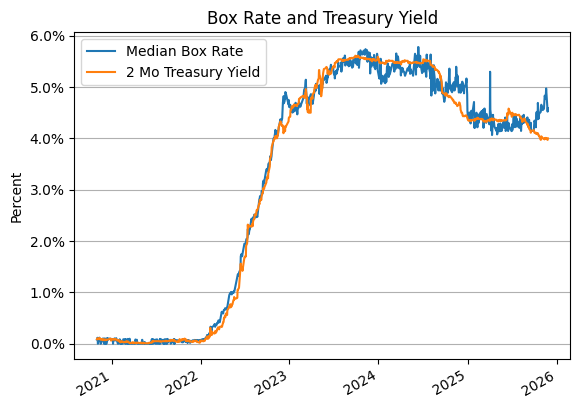
Box spreads are highly effective instruments for inferring the risk-free rates. Historically, their implied yields have averaged very close to comparable T-bill rates, often differing by only a few basis points. This tight alignment is maintained by efficient arbitrage, which ensures the box spread offers a return equivalent to a synthetic zero-coupon bond.
Here is a chart over last 5 years
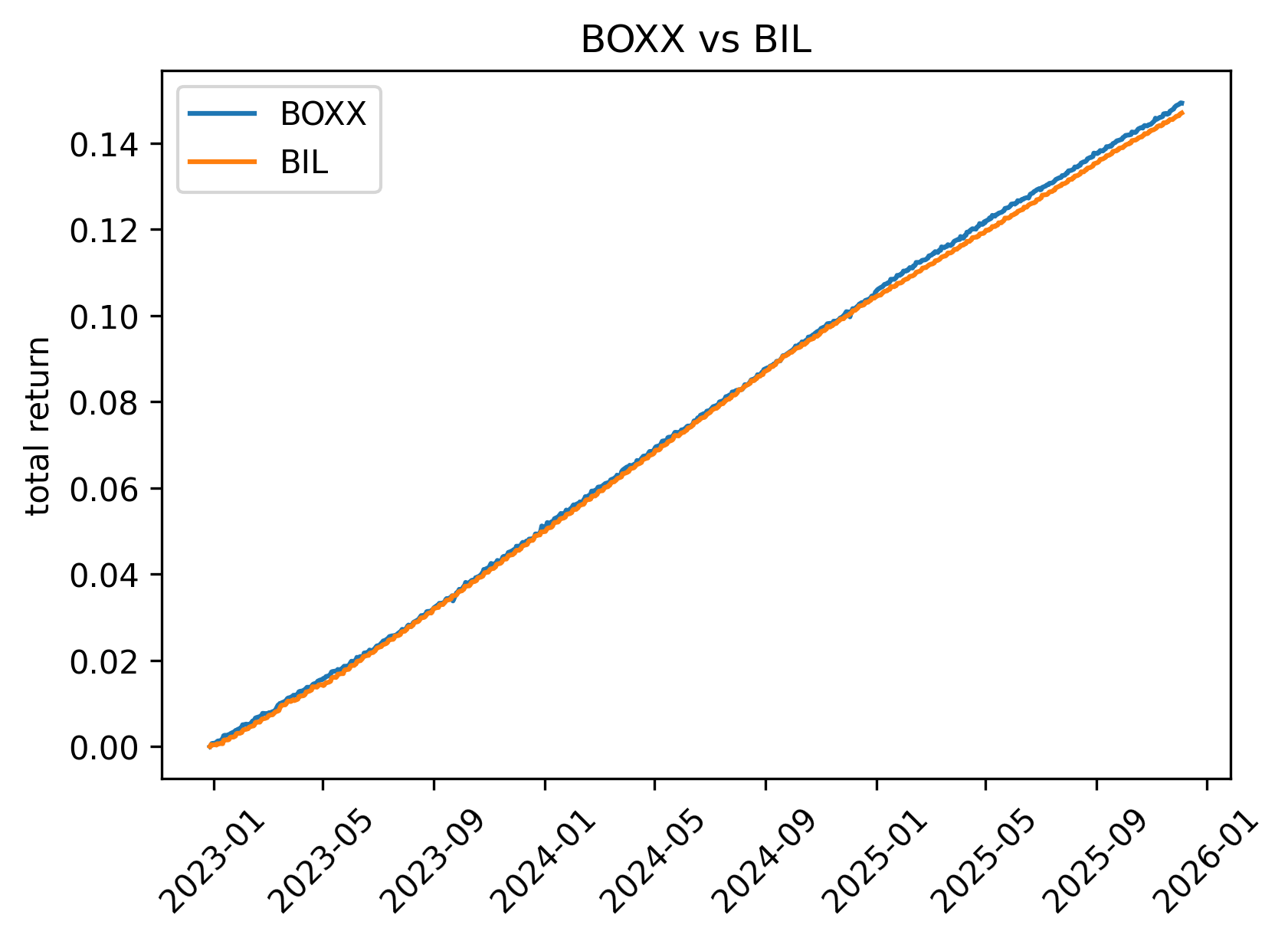
The Box ETF’s performance since inception (late 2022) illustrates this: Annualized returns of \~4.9%, slightly beating short-term Treasuries ETF BIL by \~7bp after fees.
### Risks: Balanced and Manageable
While designed for stability, no strategy is risk-free. Key considerations include:
* **Rate Compression**: Yields could tighten if options liquidity floods the market, reducing the premium over T-bills. However, historical data shows boxes still perform.
* **Temporary Mark-to-Market (M2M) Losses:** Sudden rates hikes could cause short-term valuation dips. Monetizing higher rates might also be delayed due to option expirations, but these resolve over time.
* **Put-Call Parity (PCP) Violations:** Fleeting mismatches in put/call pricing can occur, but they create arbitrage opportunities that quickly correct, minimizing impact.
We mitigate these through a diversified portfolio of short-duration boxes, active monitoring, and conservative leverage. If there are large redemption requests, during a small drawdown, it’s possible we might be limited in terms of how much capital we can return, before the options expire, without incurring additional fees to trade out of our positions. Overall, the risk profile is akin to ultrashort bonds — low volatility with principal preservation focus.
### Drawdown Analysis:
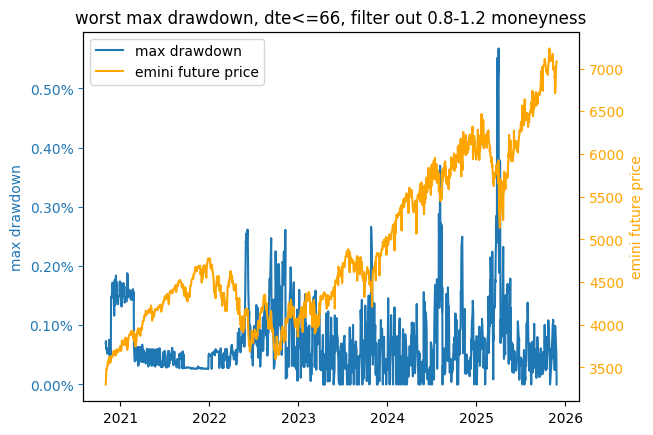
We measure all daily losses, for E-mini options on CME, in order to evaluate the potential for a temporary dislocation. The max loss is approximately -0.5%, and this was the most severe daily drawdown for the S\&P 500 in the last 5yr.\
| Date | Strategy Loss | s\&p Loss |
| -------- | ------------- | --------- |
| 4/3/2025 | -0.44% | -4.93% |
| 4/4/2025 | -0.50% | -5.98% |
| 4/7/2025 | -0.44% | -0.24% |
### **Conclusion:**
Box spreads are a proven TradFi yield harvesting strategy that’s currently untapped in crypto. Unlike t-bills, or cash-and-carry, it is also a pure derivatives play, and offers the potential for levered returns. While the amount of total leverage at scale remains to be seen, modest leverage appears very safe. The main tradeoff is, if there are too many redemption requests all at once, some might have to wait until the short-term options expire before returning capital.
{% hint style="warning" %}
All yield figures based on historical or modeled performance are subject to change based on market conditions. Past performance does not guarantee future results.
{% endhint %}
{% hint style="warning" %}
While Box Spreads form Main St's core yield engine, we maintain flexibility to incorporate supplementary strategies that enhance portfolio diversification and stability.
{% endhint %}